What We Build
Decks & Docks
Everybody looks at the decking. We would rather you looked underneath it, because that is where a deck is actually won or lost.
Judged on the part you cannot see.
Decking boards are a finish material. The frame under them is the deck. Joist spacing, blocking at every bearing point, proper flashing where the ledger meets the house, and hardware that will not corrode away in fifteen years — that is what you are actually buying.
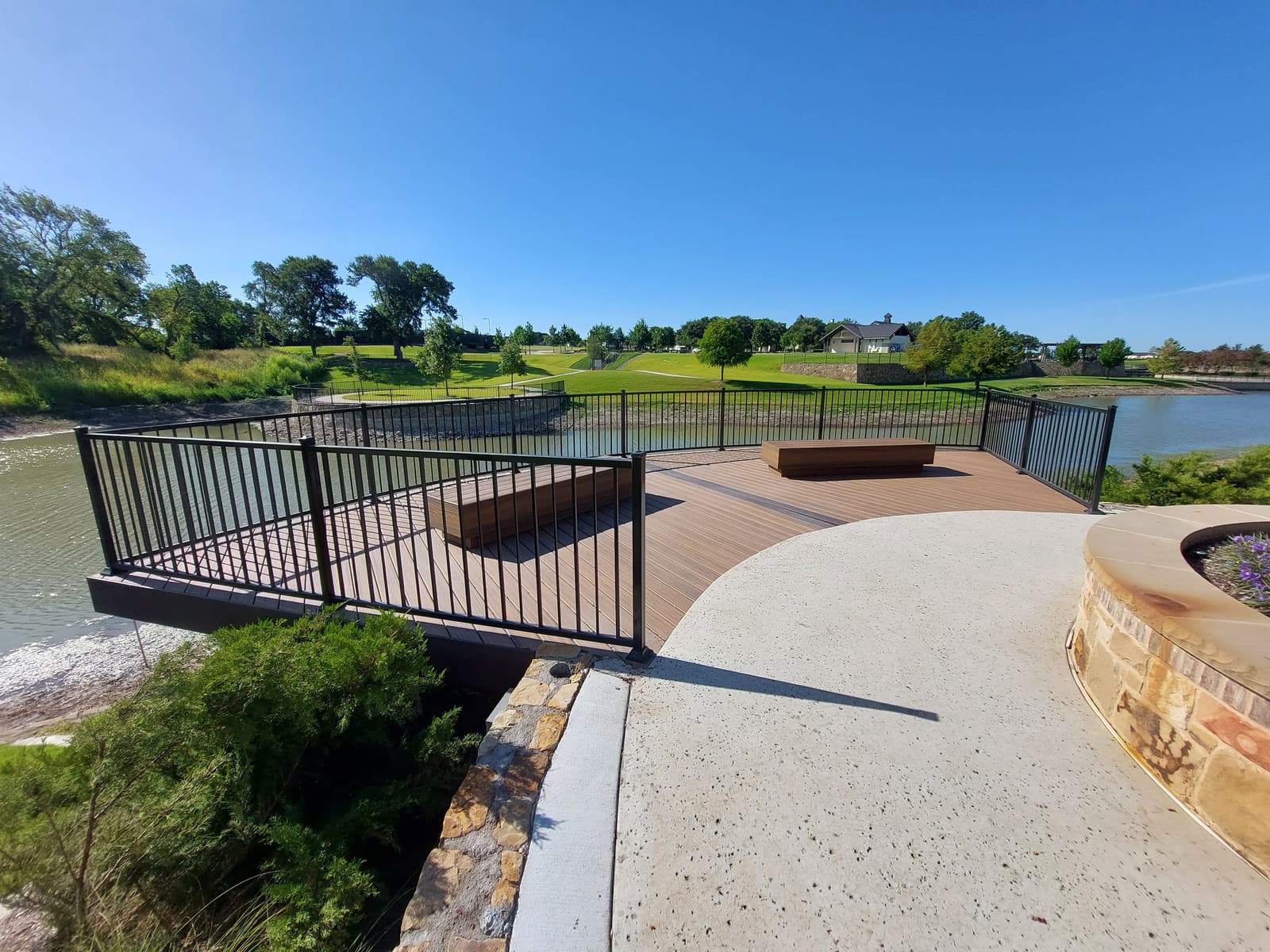
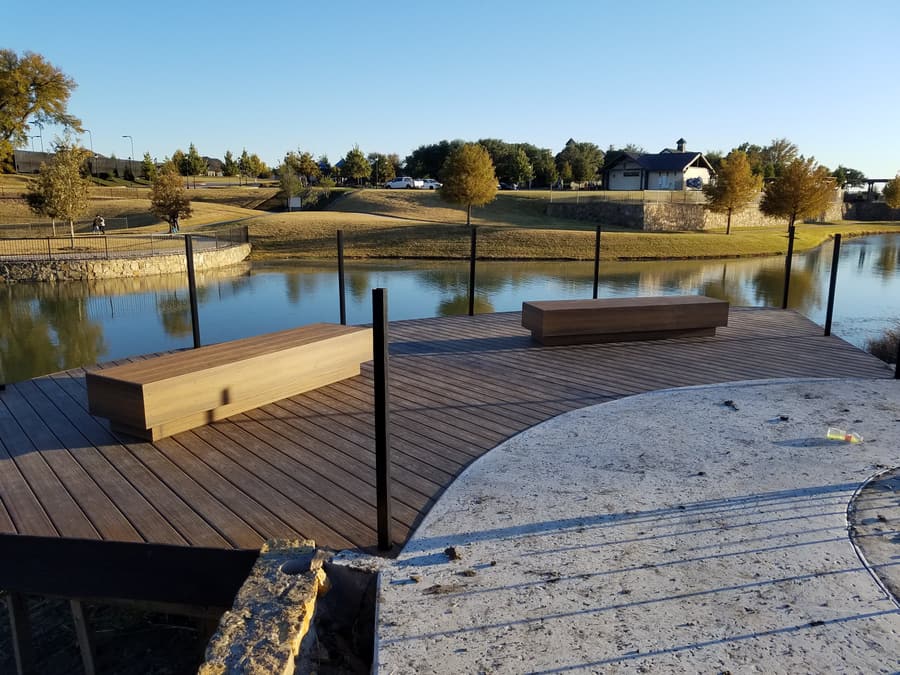
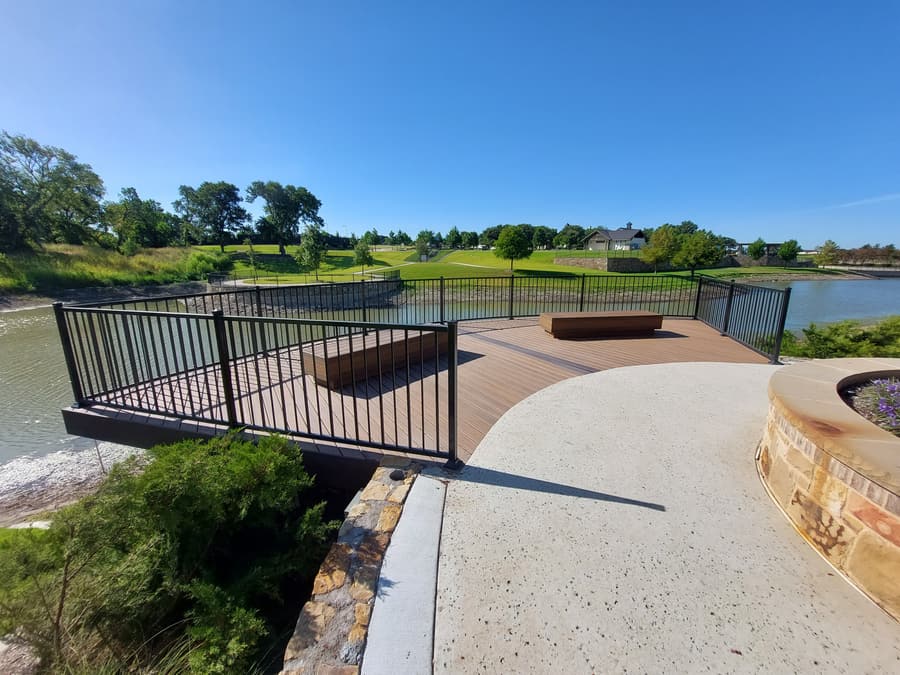
We build residential decks, and we build waterfront work: docks, overlooks and amenity decks that have to take public traffic and sit over water. The curved dock in our gallery had every joist cut and set on site to hold that radius.
- Properly flashed and bolted ledger connections
- Blocking at every bearing point
- Curved and radius framing cut on site
- Cedar, treated and composite decking
- Helical piers for waterfront and poor soil
- Powder-coated steel and cable railing
- Benches framed into the substructure
- Commercial-spec amenity and public-use decks
Ledger flashing, or how decks fail
The most common catastrophic deck failure in the country is a ledger board pulling off a house because water got behind it and rotted the rim joist. It is also completely preventable.
We flash every ledger, bolt it with structural fasteners in the right pattern, and never rely on lag screws driven into whatever happened to be behind the siding. If your existing deck is attached with nails or deck screws, tell us — we will look at it for free and tell you straight whether it is safe.
Cedar or composite
Cedar is warmer underfoot, cheaper up front, and looks better than composite for the first several years. It also wants cleaning and re-oiling every year or two, and that is a real commitment.
Quality composite costs more, holds its color, and takes zero maintenance beyond washing. On a dock or anything over water we default to composite — the maintenance access is terrible and the exposure is brutal. On a shaded backyard deck, cedar is a legitimate choice and often the better-looking one.
Docks, overlooks and amenity decks
Waterfront and community work is a different animal: helical or driven piers instead of poured footings, commercial load requirements, guardrail heights that get inspected, and coordination with concrete and landscape crews working the same site.
We have built lakeside overlooks and community docks with curved framing, integrated bench seating and powder-coated steel rail. If you are a developer or an HOA, we can work to your stamped drawings and hit an amenity opening date.
Gallery
Decks & Docks we have built.
Our Process
How a project actually goes
No mystery, no moving target. Here is exactly what happens from the first phone call to the last sweep of the driveway.
We walk your yard
Nathan comes out, looks at the space, and asks what you actually want to do out there. Where the sun lands at four in the afternoon, where the gas and power are, what the HOA will allow. No sales pitch, no pressure, no charge.
A real design, not a guess
You get a drawing with dimensions, material specs and stain colors — enough to see it before it exists and enough to hand to an HOA architectural committee.
One number, in writing
An itemized, fixed bid. Everything that is included is on the page. If something genuinely changes, we tell you before we do it, not after. No change-order games.
Permits and inspections
We pull the city permit, schedule the inspections, and handle the HOA submittal packet. You do not chase paperwork.
We build it and we clean up
A start date you can plan around, a crew that shows up when we say, and a site that gets swept every evening. When we hand it over, it is finished — stained, sealed, and ready.
Common Questions
About decks and docks.
How long does a deck last in North Texas?
A properly framed deck lasts as long as its frame — which, with treated lumber, proper flashing and galvanized or stainless hardware, is decades. The decking surface is what wears. Cedar surfaces typically want replacing or serious refinishing somewhere past the ten-year mark depending on exposure and upkeep; quality composite goes far longer.
Can you fix or rebuild my existing deck?
Often, yes — and sometimes we will tell you not to. If the frame is sound and flashed correctly, re-decking is a great value. If the ledger is nailed on and the posts are buried in dirt, patching it is spending good money on a structure we would not let our own family stand on. We will show you what we find and let you decide.
Do you build docks and waterfront structures?
Yes. We have built community docks, lakeside overlooks and amenity decks with curved framing and steel rail, including work built to commercial spec and inspection. Waterfront work has its own permitting and pier requirements, and we handle that.
Free Estimates
Ready to talk about your deck?
Nathan will walk your yard, talk through what will actually work, and give you a written number. It costs nothing and there is no obligation on the other side of it.