Materials · Guide
Cedar vs. Pressure-Treated Pine: What We Use and Why
One of these twists as it dries and one does not. That single difference decides most of the argument.
This is the most common material question we get, and it deserves a straight answer rather than a sales answer.
Short version: cedar for anything you will look at every day. Pressure-treated pine for framing you will never see, and for ground contact where treated lumber is genuinely the correct product.
The real difference is movement
Everybody talks about rot resistance, and that matters. But the difference that shows up in your backyard is how the two species behave as they dry.
Pressure-treated pine arrives at the yard wet — the treatment process forces chemical into the wood under pressure, and that lumber can carry a great deal of moisture. As it dries in the Texas sun over the following months, it moves. It cups, it checks, it twists.
A twisted rafter is a twisted rafter forever. You can install forty perfectly straight treated 2x8s and come back in eight months to find a third of them have wound themselves into a spiral. On a structure where the rafters are the visible architecture, that is the whole ballgame.
Western Red Cedar is dimensionally far more stable. It arrives drier, it moves less as it acclimates, and it stays where you put it.
Rot and insect resistance
Cedar contains natural oils and tannins that make it genuinely resistant to rot and to insects, without chemical treatment. That resistance is in the heartwood — the darker material — so heartwood-content grade matters when you buy it.
Pressure-treated pine has chemical preservative forced into it, and for ground contact or direct soil exposure, properly rated treated lumber is the right product and cedar is not. Where treated lumber genuinely wins, we use it, and we do not pretend otherwise.
Finish
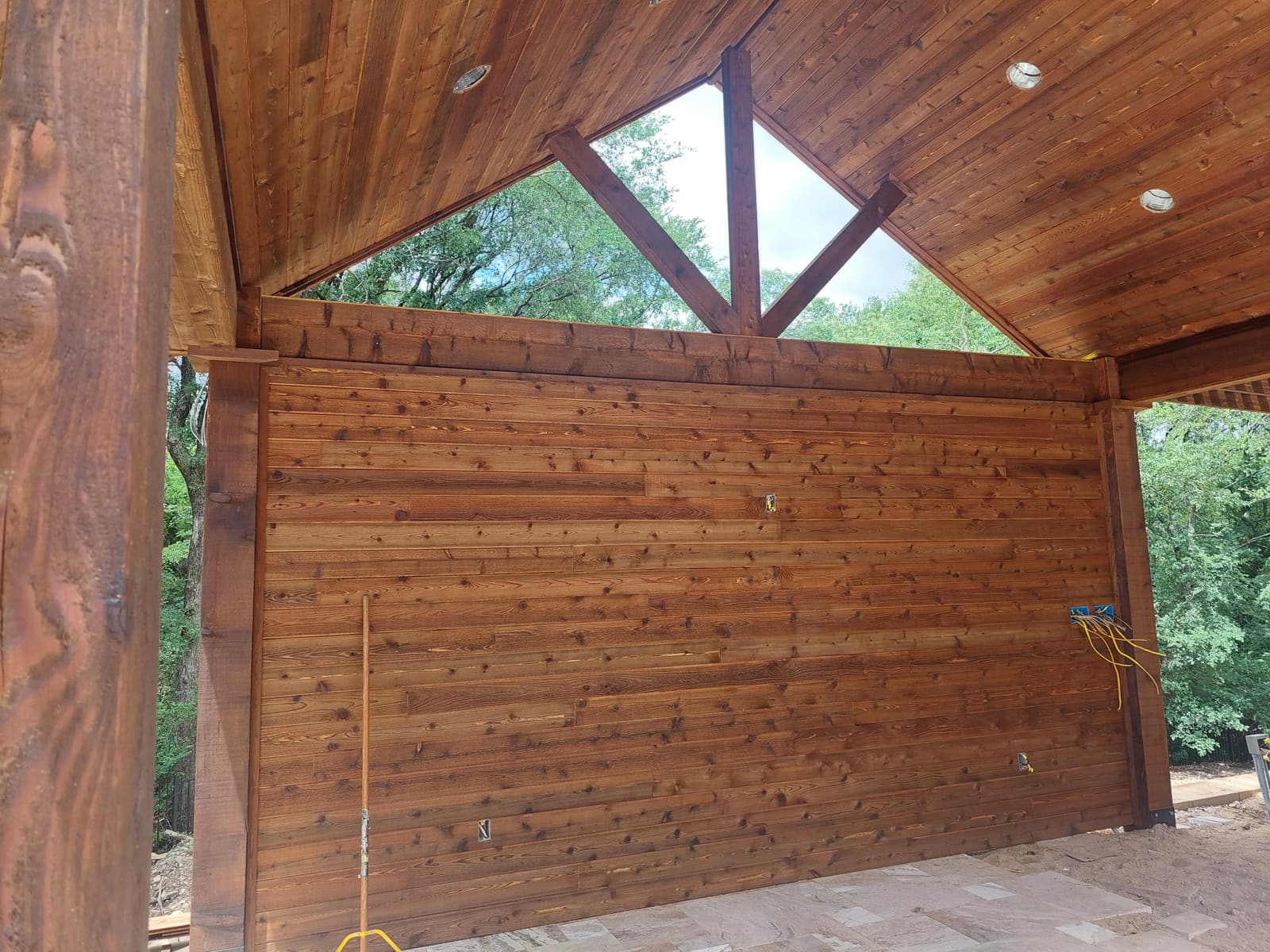
Cedar takes a penetrating oil stain beautifully — the grain comes up, the color goes deep, and it looks like furniture. That is most of why the structures in our gallery look the way they do.
Treated pine takes stain poorly when it is new, because it is still wet, and it needs to dry out for months before it will accept a finish properly. Most people do not wait. They stain it wet, the finish sits on the surface instead of penetrating, and it fails early.
Cost
Cedar costs meaningfully more per board foot. That is real and we are not going to talk around it.
What we would say is that on a typical residential structure, lumber is one line among several — footings, labor, roofing, electrical, finish. Stepping the visible members from treated pine to cedar moves the total by less than most people assume, because it is not moving the whole number.
And the comparison that matters is not cedar-now versus pine-now. It is cedar-now versus pine-now-plus-the-cost-of-looking-at-twisted-rafters-for-twenty-years.
Where we use each
| Component | What we use | Why |
|---|---|---|
| Posts, beams, rafters (visible) | Cedar | Stability and finish. This is the architecture. |
| Tongue-and-groove ceiling | Cedar | Nothing else looks like it or holds stain like it. |
| Deck framing (hidden) | Treated pine | Correct product, never seen, structurally excellent. |
| Anything in soil contact | Rated treated | Cedar is not the right product here. |
| Deck surface | Cedar or composite | Depends on maintenance appetite — see below. |
What about composite and aluminum?
Composite is excellent decking and it is our default on docks and anything over water, where maintenance access is terrible and exposure is brutal. It is not a structural material and it is not what you frame with.
Aluminum pergola kits exist and they have a place — low maintenance, consistent, quick. They also look like what they are. If what you want is the warmth of real wood and joinery you can see, that is a different product and a different reason to build.
We build in wood because that is what we are good at and because it is what the structures we are proudest of are made of. If an aluminum kit is genuinely the right call for your budget and your goals, we will tell you that too.
Questions people ask
Is cedar worth the extra cost over pressure-treated pine?
For anything visible, yes. The decisive difference is movement — treated pine arrives wet and twists as it dries, and a twisted rafter stays twisted. Cedar is dimensionally stable, naturally rot resistant and takes stain far better. For hidden framing and ground contact, treated lumber is the correct product.
When should cedar be stained?
Before it weathers. Once UV breaks down the surface fibers, cedar never takes stain the same way again. We sand and apply a penetrating oil finish before handing a project over rather than leaving it to the homeowner months later.
Do you build with aluminum pergola kits?
No. Kits have a place for low-maintenance, budget-driven projects, but they look like what they are. We build in real lumber with joinery you can see — and if a kit is genuinely the better fit for your goals, we will say so rather than sell you something else.
Keep Reading
Related from the journal
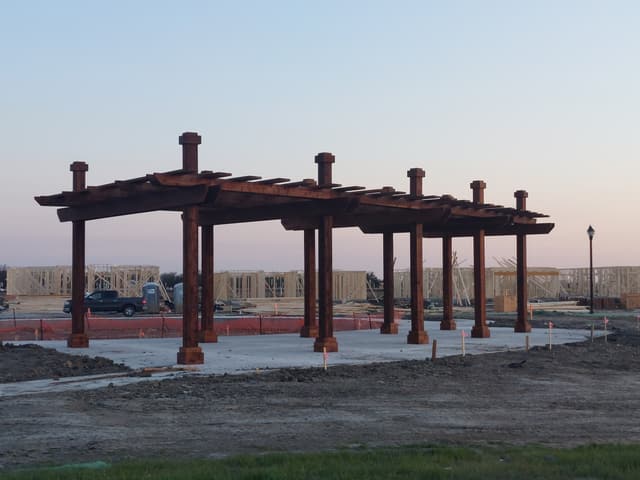
Do You Need a Permit for a Pergola in DFW?
Usually yes. Always if it attaches to the house. And the HOA is a separate process from the city — here is how both actually work.
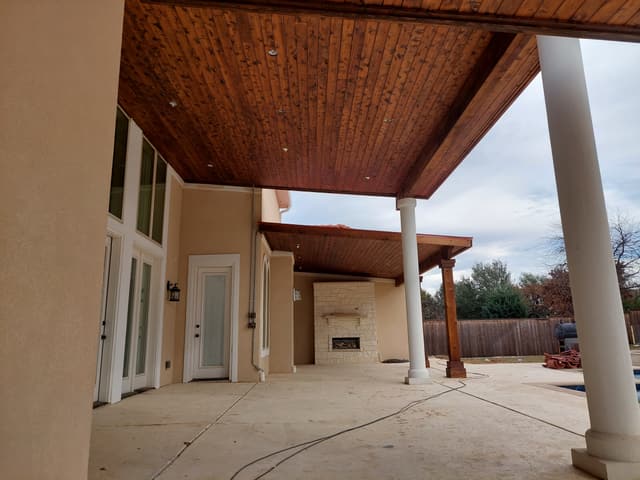
What Drives the Cost of a Covered Patio in DFW
We are not going to put a fake number on a web page. We will tell you exactly what moves it, in order.
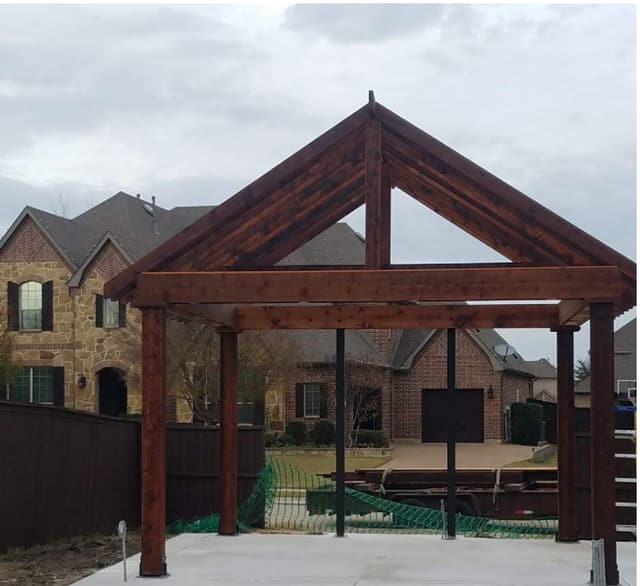
Pergola vs. Patio Cover vs. Pavilion: Which One Do You Actually Want?
People come to us asking for one and often want another. Here is how to tell the difference before you spend money.
Free Estimates
Tell us what you want to build.
Nathan will walk your yard, talk through what will actually work, and give you a written number. It costs nothing and there is no obligation on the other side of it.