Maintenance · Guide
Keeping Cedar Looking Right in the Texas Sun
Cedar does not fail from neglect. It goes gray, and gray is permanent in a way people do not expect.
Cedar is remarkably durable. Left completely alone it will not rot out from under you for a very long time — the natural oils see to that.
What it will do is go gray. And people are consistently surprised by how quickly, and by how hard that is to fully undo.
What UV actually does
Sunlight breaks down lignin, the compound that binds wood fibers together. On the outermost layer of an unprotected board, that breakdown produces the silver-gray patina everybody recognizes, and it loosens surface fibers so they wash away in rain.
In North Texas — full sun, long summers, high UV index — this happens faster than most of the country. Unprotected cedar can shift noticeably within a single season and be fully gray inside two.
Some people genuinely like the gray. If that is you, this is not a problem and you can stop reading. If you want the warm color in our photos, that color is a finish, and finishes are consumable.
The realistic schedule
Depends heavily on exposure. Full-sun horizontal surfaces are the hardest hit; shaded vertical surfaces last far longer.
- Full-sun decking and horizontal rails: plan on re-coating every 1–2 years.
- Pergola rafters and beams, full sun: 2–3 years.
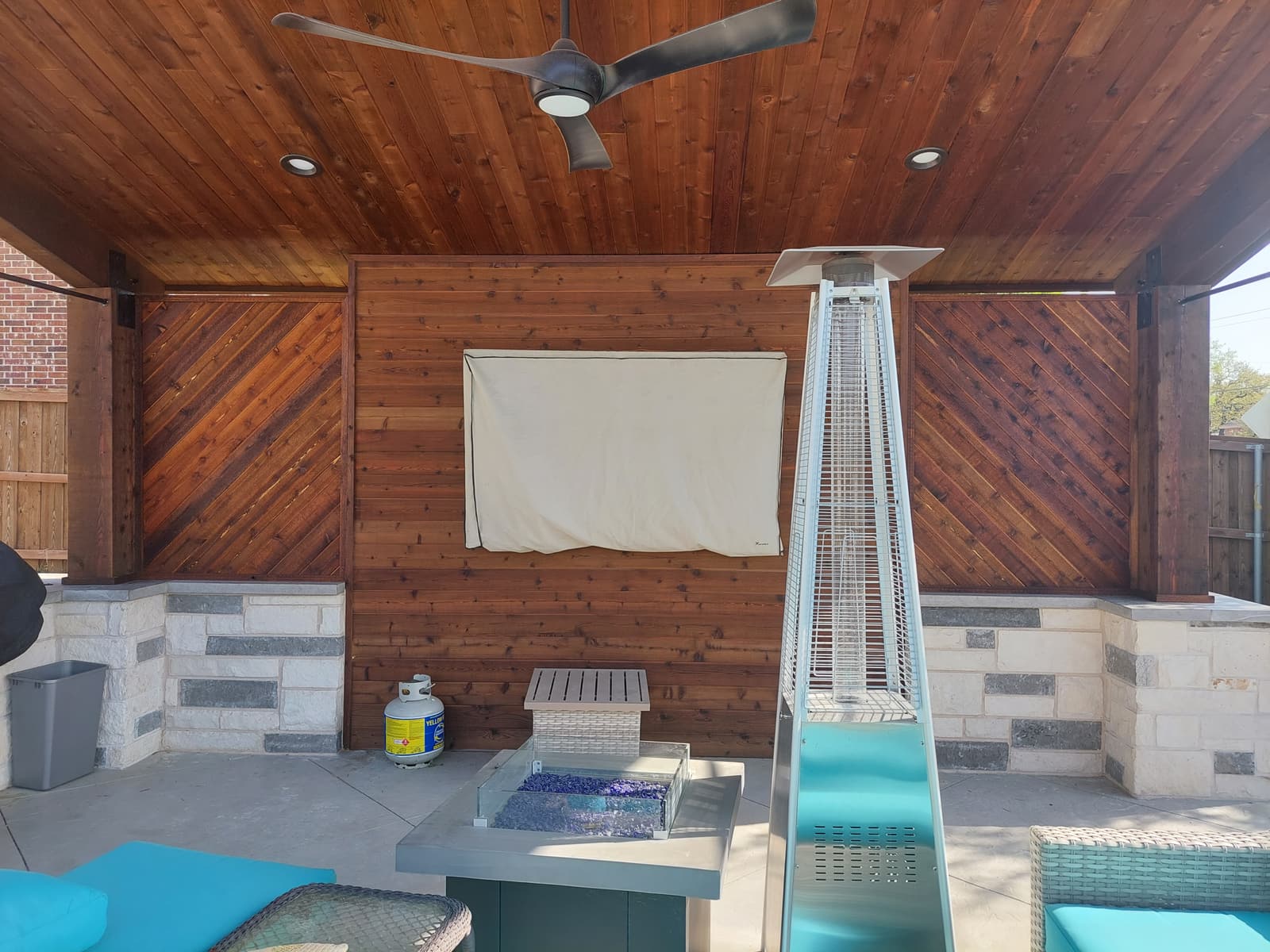
- Ceilings and anything under a roof: 5+ years, sometimes much longer. Protected from direct UV and rain, cedar ceilings hold their finish remarkably well.
That last point matters when you are choosing between a pergola and a covered patio. A cedar ceiling under a roof is close to zero maintenance. Cedar in full sun is a recurring commitment.
How to actually do it
1. Clean first. A dedicated wood cleaner, a soft brush, and a garden hose. You are removing dirt, mildew and the loose degraded surface fibers.
2. Brighten if it has gone gray. An oxalic-acid-based wood brightener restores much of the original tone after cleaning. This step is what makes the difference between a re-coat that looks new and one that looks like stain over gray wood.
3. Let it dry completely. Two or three dry days. Applying finish to damp wood traps moisture and the coating fails early. This is the step people skip and it is the one that matters most.
4. Apply a penetrating oil. Thin coats, worked in, wiping back any excess that has not absorbed. Penetrating oil soaks into the wood; it does not sit on top of it.
Mistakes we see
Pressure washing on high. This is the fastest way to permanently ruin cedar. A high-pressure tip carves out the soft spring growth and leaves the hard grain standing proud — a furry, ridged surface that never sands smooth. If you use a pressure washer at all, use the widest tip, the lowest setting, and keep it moving well back from the surface.
Film-forming finishes. Deck paints and heavy film coatings sit on the surface. When they fail — and outdoors in Texas they will — they peel, and then you are stripping rather than re-coating. Penetrating oil fades instead of peeling, which means the next maintenance cycle is clean-and-recoat rather than a restoration project.
Waiting too long. Re-coating cedar that has just started to fade is easy work. Restoring cedar that has been gray for four years is a genuine project.
Staining wet wood. Covered above and worth repeating, because it is the most common failure.
What actually threatens the structure
Finish is cosmetic. These are the things that matter structurally, and they are all worth a five-minute look once a year:
- Standing water at post bases. This is why we set posts on standoff bases. Check that soil or mulch has not been built up against a post over the years.
- Debris on a low-slope roof. Leaf litter holds moisture. Under heavy canopy, clear it seasonally.
- Anything loose. A connection that has worked loose transfers load somewhere it was not designed to go. Tighten it or call us.
- Ledger flashing on decks. If you can see daylight or moisture where a deck meets the house, that is urgent, not cosmetic.
Do those four things and the structure will outlast most of what else is in the yard.
If you would rather not
Entirely fair. If low maintenance is the priority, tell us during design and we will spec toward it — composite decking, metal roofing, cedar concentrated in protected locations like ceilings where it holds finish for years rather than in full sun where it does not.
That is a legitimate design brief and we would rather build to it honestly than hand you something beautiful that needs work you were never going to do.
Questions people ask
How often does cedar need to be re-stained in Texas?
Full-sun decking and horizontal rails every 1–2 years; pergola rafters and beams in full sun every 2–3 years; cedar ceilings under a roof 5+ years and often much longer, since they are protected from direct UV and rain.
Can I pressure wash a cedar pergola?
Only with great care. A high-pressure tip carves out soft spring growth and leaves hard grain standing proud — a furry, ridged surface that never sands smooth. Use the widest tip, the lowest setting, keep well back and keep moving. A wood cleaner and a soft brush is safer.
What happens if cedar goes gray?
It is a surface effect, not structural failure. An oxalic-acid wood brightener after cleaning restores much of the original tone, but wood that has been gray for years never takes stain quite like fresh cedar. Re-coating early is far easier than restoring late.
Keep Reading
Related from the journal
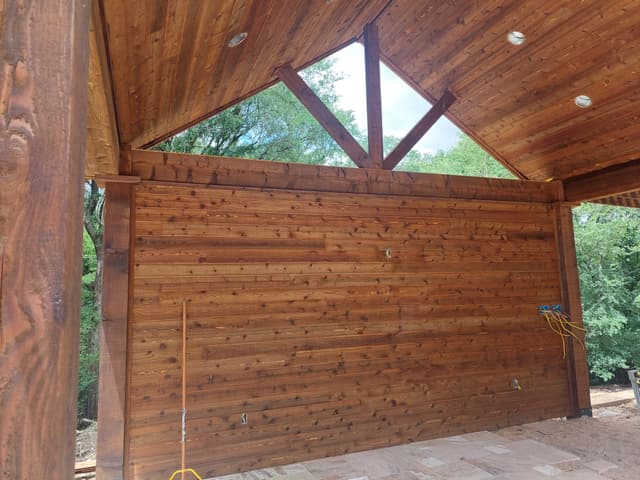
Cedar vs. Pressure-Treated Pine: What We Use and Why
One of these twists as it dries and one does not. That single difference decides most of the argument.
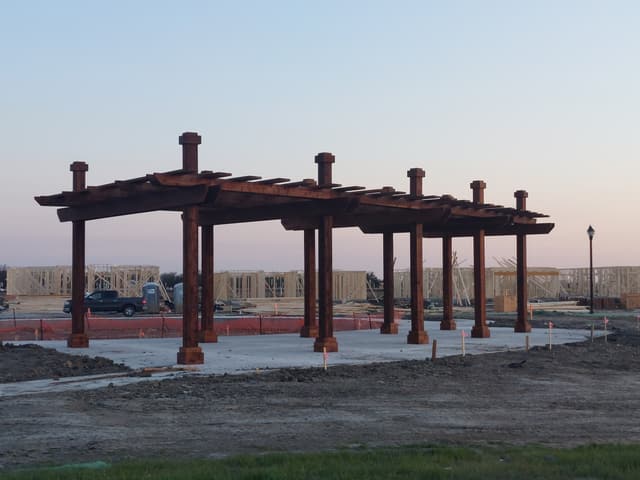
Do You Need a Permit for a Pergola in DFW?
Usually yes. Always if it attaches to the house. And the HOA is a separate process from the city — here is how both actually work.
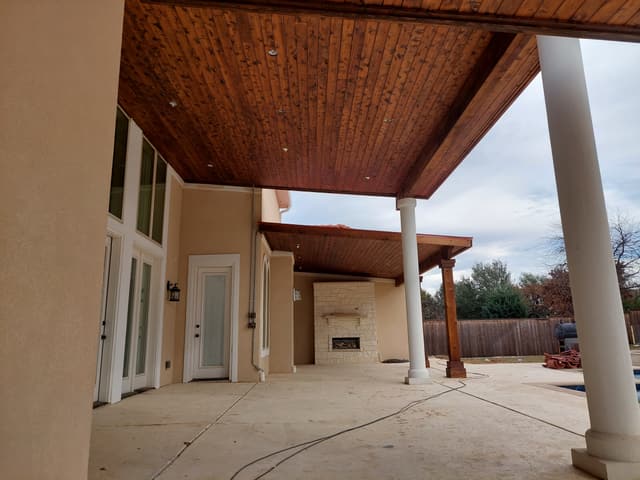
What Drives the Cost of a Covered Patio in DFW
We are not going to put a fake number on a web page. We will tell you exactly what moves it, in order.
Free Estimates
Tell us what you want to build.
Nathan will walk your yard, talk through what will actually work, and give you a written number. It costs nothing and there is no obligation on the other side of it.