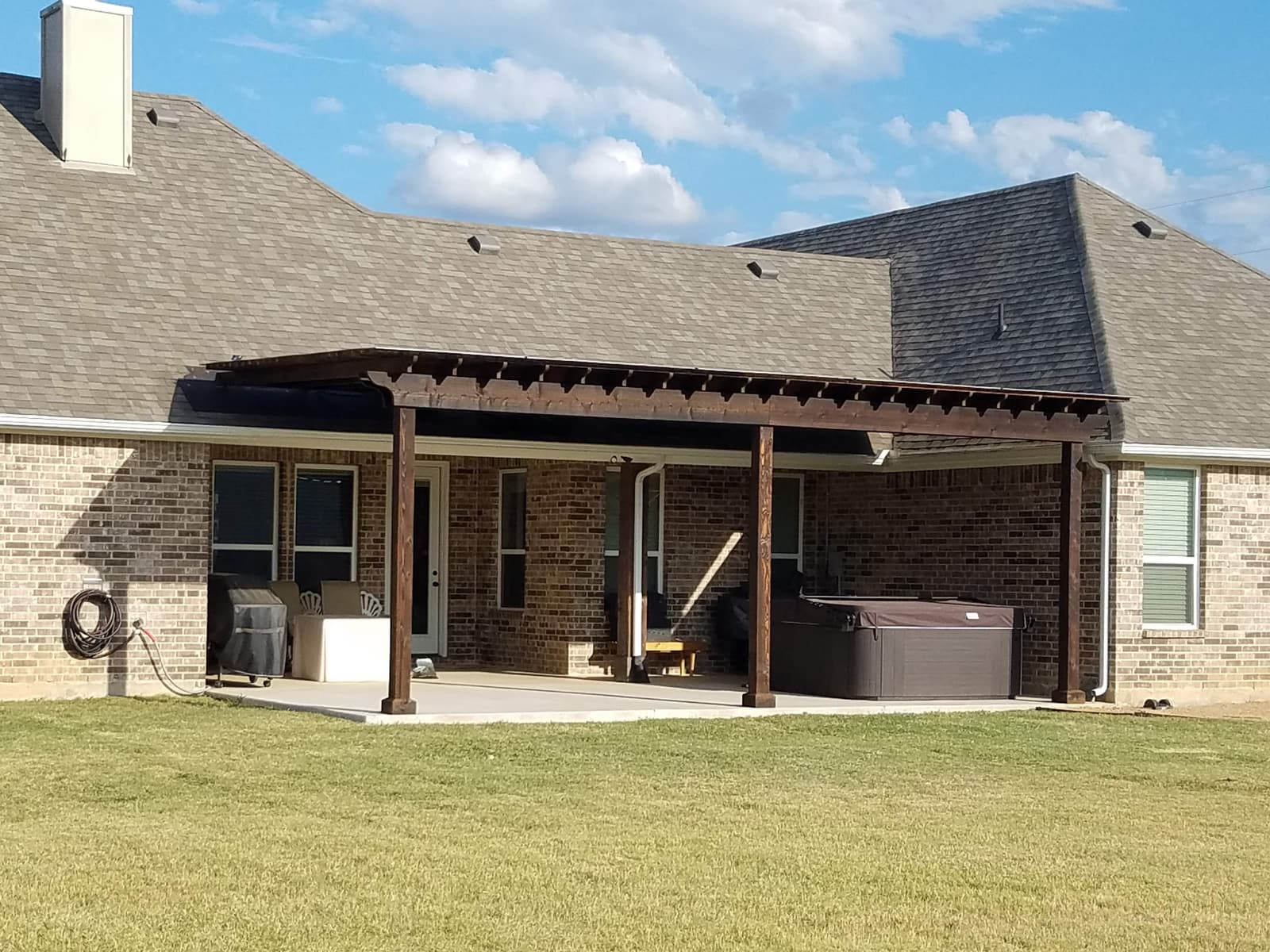
Fort Worth · Pergolas
Pergolas in Fort Worth: What Works, What It Costs, and What to Avoid
A pergola behind a 1930s bungalow in Ryan Place and a pergola in Walsh Ranch are two different projects. Here is how we think about both.
We get asked "what does a pergola cost in Fort Worth" more than any other question, and the honest answer is that the question is missing a step. A pergola behind a 1930s brick bungalow in Ryan Place and a pergola behind a 2019 house out in Walsh Ranch are two genuinely different projects — different scale, different shade requirement, different soil, sometimes a different permitting path entirely.
So before the number, here is how we actually think about building one here.
Fort Worth is two building environments
East of the river — Arlington Heights, Ryan Place, Bluebonnet Hills, Fairmount — you are working behind homes built between roughly 1920 and 1945. Smaller lots. Alley access. Detached garages. And critically, a mature pecan and live oak canopy that is already doing half your shading for you.
In those yards the mistake we see most often is scale. Somebody builds a twenty-four foot pergola with twelve-inch posts behind a 1,600 square foot bungalow, and it looks like a structure landed on the property. The house has a rhythm — window spacing, porch column size, roof pitch — and a pergola behind it should answer to that. Usually the right build there is modest, freestanding, sited under the existing canopy, with post and beam sizes taken off the house rather than off a catalog.
Out west and north, it is the opposite problem. Walsh Ranch, the Alliance corridor, newer sections of Wedgwood and Mira Vista: bigger lots, generous setbacks, and effectively zero mature tree cover. The trees the builder planted are eight feet tall and will not matter for fifteen years.
The shade math nobody explains up front
This is where most disappointment comes from, so we will be blunt about it.
A standard open-rafter pergola — 2x8 rafters set at 16 inches on center — throws roughly 40 to 50 percent shade at midday. That is genuinely pleasant in May and October. In August, at two in the afternoon, with a west-facing unshaded Fort Worth backyard, it is not enough. And at four in the afternoon it is worse than not enough, because low-angle sun comes in under the rafters rather than through them.
You have a ladder of options, and each one costs a little more:
- Tighter rafter spacing plus purlins. Running purlins perpendicular across the top of the rafters gets you to roughly 65–70% shade for a modest material increase. Best value on the list.
- A slat or louver screen on the west side. This is the fix for the four-o'clock problem specifically. Vertical elements block low sun that horizontal rafters cannot.
- Panel deck over the rafters. Polycarbonate or metal panels laid over the top give you full sun and rain protection while keeping the open pergola look from underneath.
- A solid roof. At this point you are building a covered patio, and we should have that conversation instead — because a covered patio gives you a finished ceiling you can hang a fan and lights from, and that changes how much you use the space far more than shade percentage alone.
Soil: Cross Timbers, not Blackland clay
Fort Worth sits mostly on the Western Cross Timbers and the Grand Prairie — generally sandier loam over limestone as you move west. That is genuinely better behaved than the heavy expansive Blackland clay our neighbors in Collin County deal with, and it is why you see fewer racked, out-of-plumb structures here than in Plano.
Better is not the same as stable. We still pour footings sized for the actual span rather than to a rule of thumb, and every post sits on a standoff base so end grain never touches concrete. That last detail is small and it is the single most common reason a cheap pergola rots out at the bottom in six years — the post wicks water up out of the concrete and quietly destroys itself from the inside.
Where limestone comes up shallow, pier drilling gets slower and more expensive. We probe before we bid when the topography suggests rock is close, so that cost is in the number you sign rather than in a change order in week two.
Permits, HOAs and historic districts
Fort Worth requires permits for accessory structures, and anything that attaches to the house always does. We pull it, schedule the inspections, and hand you the paperwork at the end. Budget one to three weeks for that process depending on the season — spring is slower because everybody files in spring.
If your property sits inside one of the city's historic districts, there is an additional design review layer, and it is worth knowing about before you fall in love with a drawing. It is not a barrier — we have worked through it plenty of times — but it adds time and it constrains materials and proportions. Find out early.
HOAs in the newer developments run their own architectural review on top of the city process. We assemble that submittal packet — elevations, site plan, material spec, stain color — as part of the job, because a rejected application in a committee that meets monthly can cost you an entire building season.
So what does it cost?
We are not going to put a number on this page and pretend it means anything, because the honest ranges are wide enough to be useless without seeing the yard. What we will tell you is what moves the number, roughly in order:
- Footprint. Square footage is the biggest single driver, and it is not linear — a longer span needs bigger beams, which needs bigger posts.
- Attached or freestanding. Attached is usually less expensive if your slab is already there. Freestanding needs more footings.
- Shade level. Purlins, screens or a panel deck each step the number up.
- Site access. If we can back a truck up to it, it costs less than if every board gets carried through a side gate.
- Rock. Shallow limestone means slower drilling.
- Extras. Privacy screens, built-in benches, lighting and electrical.
What you get from us is one fixed, itemized number in writing after we have walked the space. Not a range, not a "starting at," and not a number that grows in month two.
What we would tell a friend
Build it once. The gap between a pergola that lasts eight years and one that lasts thirty is not exotic material — it is footing depth, standoff bases, through-bolted connections instead of toe-nailing, and finishing the cedar before it weathers gray rather than after.
Those details add a modest amount to the bid and they are the entire difference. If you are comparing quotes and one is meaningfully cheaper, ask specifically about those four things. The answer will tell you what you need to know.
Questions people ask
Do I need a permit for a pergola in Fort Worth?
Usually yes, and always if it attaches to the house. Fort Worth requires permits for accessory structures, and properties in a historic district have an additional design review layer. We pull the permit and schedule inspections as part of the job.
How much shade does a pergola actually give you in Fort Worth?
A standard open-rafter pergola throws roughly 40–50% shade at midday. That is comfortable in spring and fall but not enough for an unshaded west-facing yard in August. Adding purlins gets you to about 65–70%, and a panel deck or solid roof gets you full coverage.
How long does a pergola take to build in Fort Worth?
The build itself is typically three to five days. Permitting ahead of it runs one to three weeks, and HOA architectural review can add more. We give you a start date, not a season.
Keep Reading
Related from the journal
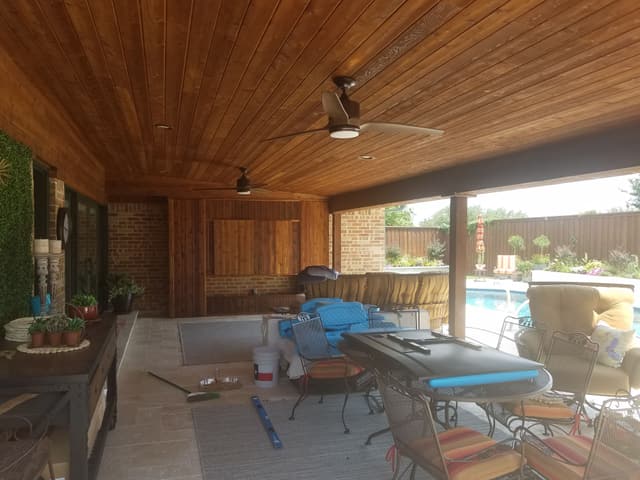
Patio Shade in Arlington: How to Cool a 1970s Backyard
Most Arlington backyards already have everything they need except shade: a flat lot, a slab poured in 1974, and a pool that has baked for forty years.
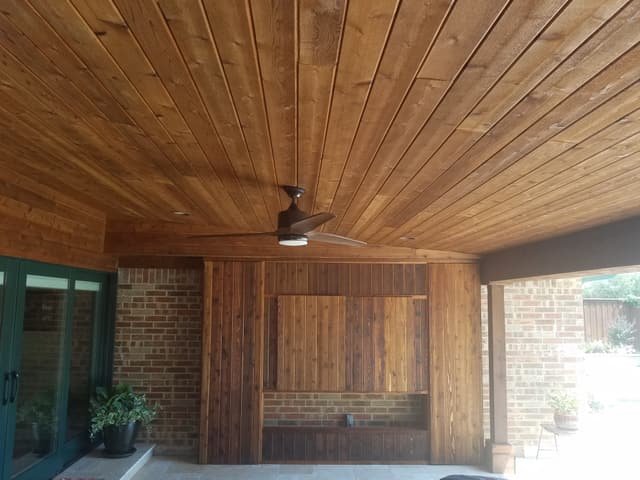
Covered Patios in Plano: Building on Soil That Moves
If you have ever wondered why so many older Plano patio covers have posts that are visibly out of plumb, the answer is under your feet.
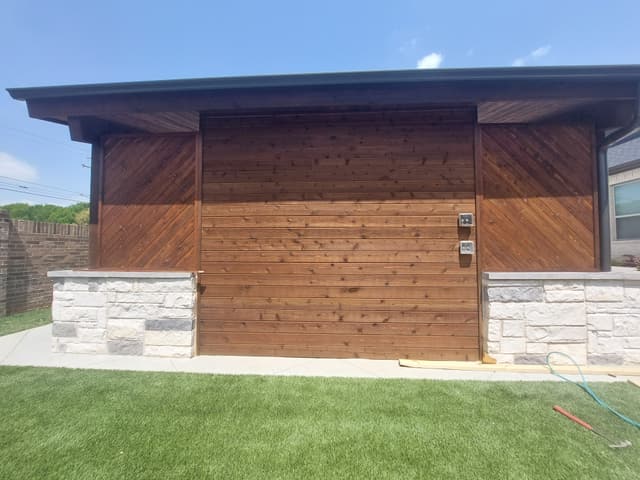
Pool Cabanas in Frisco: Shade for a West-Facing Backyard
A new house, a pool that cost real money, and not one square foot of shade because the trees are eight feet tall. Frisco has a very specific problem.
Free Estimates
Tell us what you want to build.
Nathan will walk your yard, talk through what will actually work, and give you a written number. It costs nothing and there is no obligation on the other side of it.